M.S. Candidate: Başak Düşün Kocakaya
Program: Information Systems
Date: 03.04.2026 / 14:30
Place: A-212
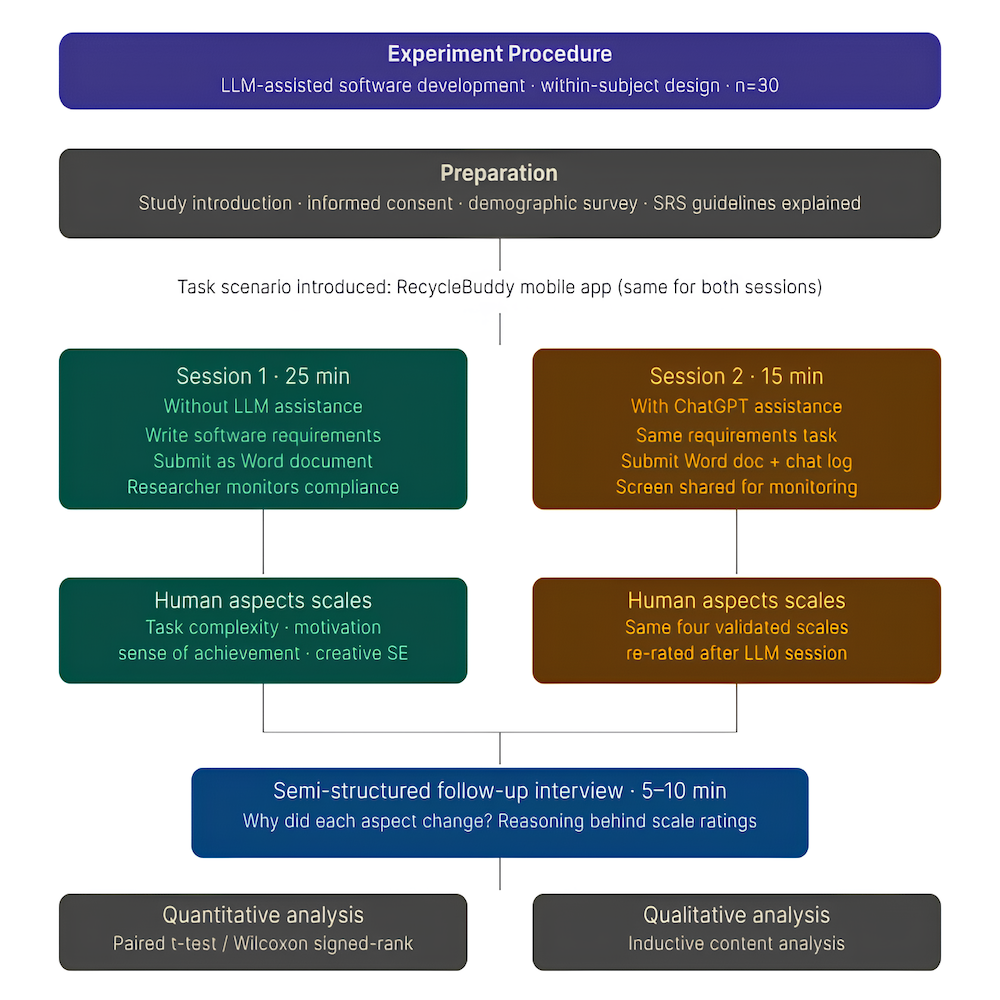
Abstract: Large Language Models (LLMs) are being integrated into multiple phases of the software development life cycle, from requirements specification to maintenance. LLMs' technical benefits on software development, such as accelerating code generation and improving defect detection have become major breakthroughs in traditional software engineering workflows. However, the impact of using these models professionally on human aspects has not been comprehensively acknowledged. Therefore, this thesis examined how LLM-assisted software development impacts four key human aspects of software practitioners in terms of perceived task complexity, task motivation, sense of achievement, and creative self-efficacy. The impact was examined through a within-subject experiment conducted with 30 software practitioners, where each of them completed a software requirements specification task without and with LLM assistance. The participants were required to write software requirements for a mobile app scenario in both conditions. After every session, participants filled out validated scales on the four human aspects and participated in semi-structured interviews to discuss both their experiences and their responses to the scales. This research provides empirical evidence on how LLM-assisted software development shapes human aspects and underscores the need to account for these influences when integrating LLM tools into software engineering workflows.