M.S. Candidate: Nisan Yıldız
Program: Bioinformatics
Date: 03.09.2026 / 16:00
Place: A-212
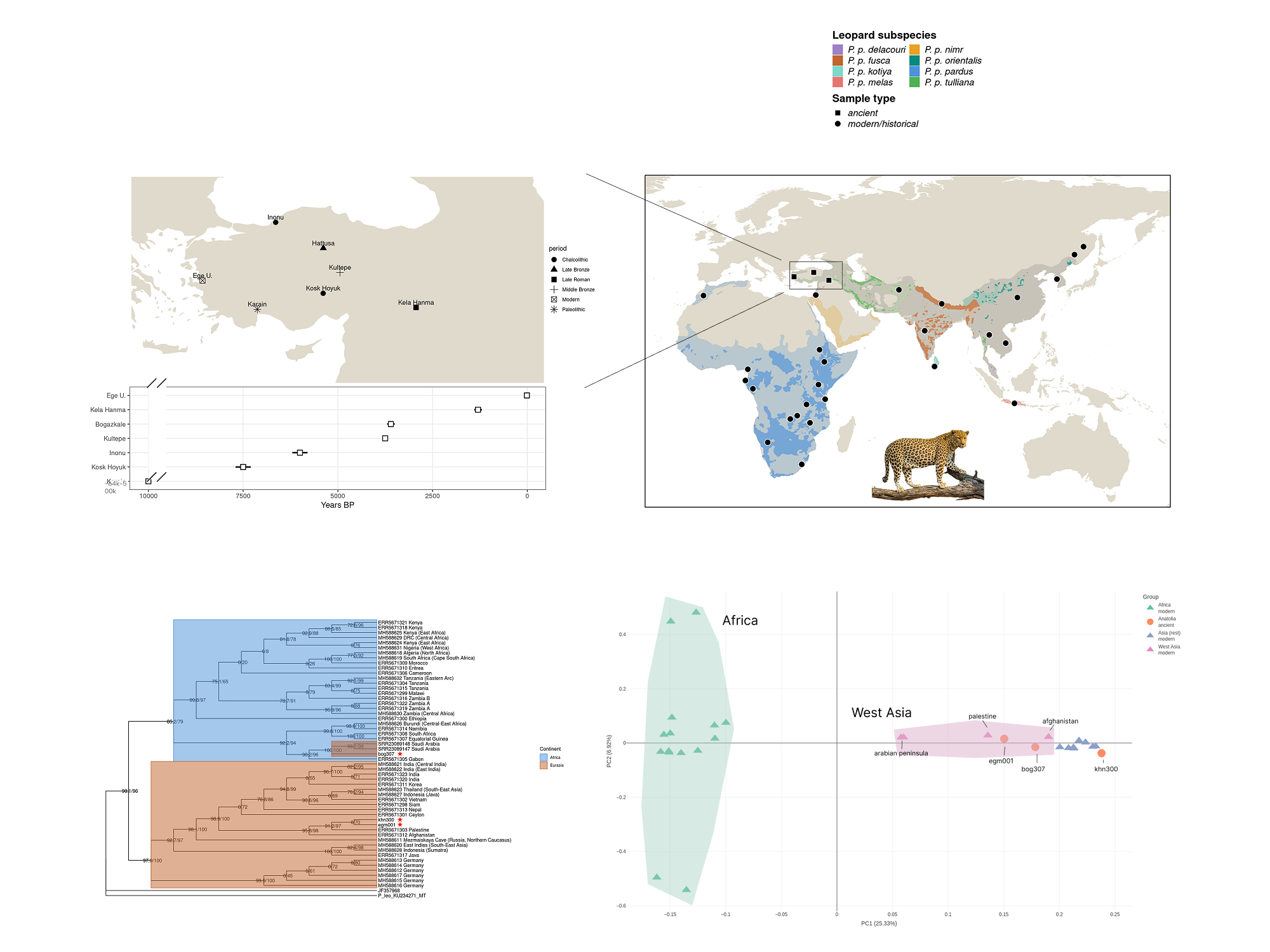
Abstract: Leopards, once widely distributed across Asia, are now either extinct or in decline in most of their historical range, with several endangered populations including the Persian Leopard P. p. tulliana. Despite their important ecological role and their influence on human cultures, Western Asian leopards are scarcely studied, with very few studies on population dynamics, genomics, and changing demographies. Such studies could help inform decisions about conservation efforts and assess the vulnerability of extant populations. To that end, we sequenced 30 putative big cat remains collected across Anatolia to investigate historical patterns from the Paleolithic to today, and recovered three historic and ancient leopard genomes with sufficient coverage for downstream analyses (0.001-0.1x), ranging from the Late Bronze Age to the 1950s CE. Together with published historic and modern genomes across the species’ distribution, we reconstructed the phylogenetic relationships of the Anatolian leopard samples using mitochondrial genomes and both Bayesian and maximum-likelihood-based inference methods. We further constructed a genome-wide de novo SNP panel to analyze the genome-wide trends of variation and relationships among extinct and extant populations of leopards and Anatolian leopards.